

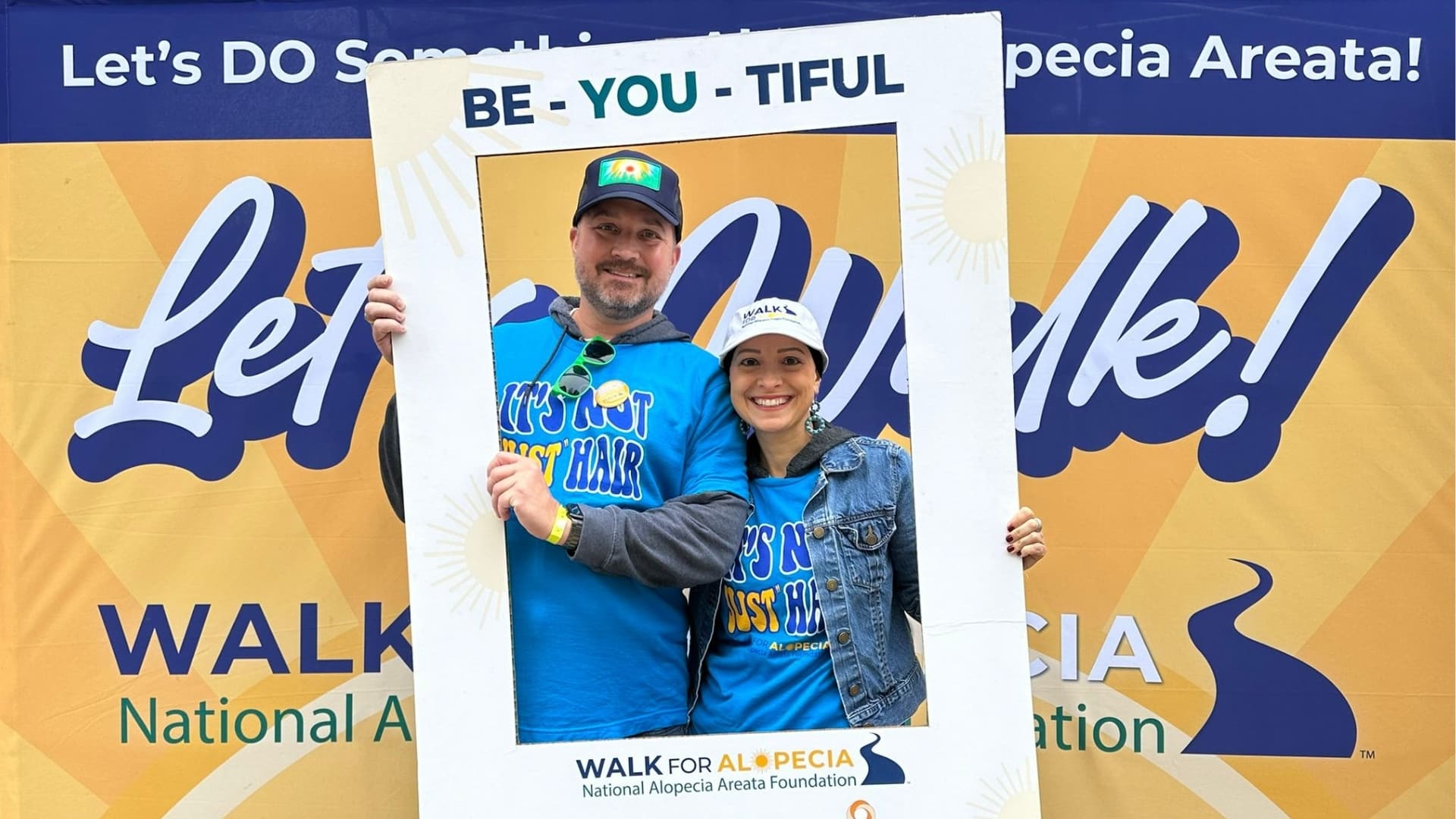
The Walk for Alopecia is held by the National Alopecia Areata Foundation (NAAF) and will take place across the country on September 26, 2026, with registration opening in May. The Walk for Alopecia is held annually on the last Saturday during Alopecia Areata awareness month as an opportunity to increase public awareness of the autoimmune disease alopecia areata, and raise money to support alopecia areata services and research. The Walk is a way for everyone, everywhere to show the world that it is not just hair!
Last year, more than 4,500 people walked at 25 community sites nationwide to raise funds and shine a bright light on alopecia areata while engaging, connecting, and supporting their local alopecia areata communities.
Anyone, anywhere can join the Walk for Alopecia movement. Volunteer-led community walk sites in Florida are located in: Miami, North Port, Tampa, and West Palm Beach. There is also always the opportunity to Walk Where You Are as a team or individual in your neighborhood!
What is Alopecia Areata?
The word alopecia means bald, and areata means patch. Alopecia areata is an autoimmune disease that causes hair loss on the scalp, face, and elsewhere on the body. The hair loss can be patchy, or it can be over much or all of the body.
Alopecia areata is a surprisingly common disease. It affects as many as 6.7 million people in the U.S. alone. About 2% of people across the world will experience alopecia areata. Anyone at any age can develop alopecia areata. It does, however, often start in childhood. Unlike most autoimmune diseases, alopecia areata does not generally cause physical discomfort or disability. However, hair loss can be difficult for many people, affecting how they feel about themselves, especially if it is extensive.
What causes Alopecia Areata?
Researchers don’t completely understand alopecia areata – how it starts, why it affects certain people, and why some people experience more hair loss than others. It is a polygenic disease, meaning it is related to multiple genetic factors. But not everyone with the genes develops the disease. About 20% of people with alopecia areata have at least one family member who has it too. Although scientists know alopecia areata is an autoimmune disease, it’s not clear what triggers the hair loss.
What is the National Alopecia Areata Foundation?
NAAF is the voice of the alopecia areata community, serving the nearly 7 million Americans affected by this autoimmune disease, which causes unpredictable, often sudden and severe hair loss. Frequently dismissed as a cosmetic condition, alopecia areata can be a deeply traumatic experience, resulting in emotional and economic pain and social isolation. It is not just hair. A catalyst for driving research, support, and awareness, NAAF empowers the community with more choices to embrace or live free of alopecia areata. They connect the patient, medical and scientific communities to drive research and treatment development, raise awareness to reduce stigma, and provide support to improve the lives of patients and their family members.
What does the National Alopecia Areata Foundation Do?
NAAF was established in 1981 to fill a need for people affected by alopecia areata. The foundation provides many services. These are just a few:
-Provides support to people who live with or who care for people with alopecia areata.
-Raises funds and awards research grants to study alopecia areata with the hope of developing effective treatments and ultimately a cure.
-Acts as the international center for alopecia areata information.
-Educates State and Federal officials on the need for fair insurance laws and greater government-sponsored medical research.
What is Being Done?
Researchers around the world are running clinical trials to find ways to effectively treat alopecia areata. NAAF contributes to this research effort by raising private funds and awarding millions of dollars in grants to fund research at university centers throughout the world. NAAF also advocates for increased federal funding for alopecia areata research to accelerate treatment development.
NAAF maintains a website (www.naaf.org) with up-to-date information about alopecia areata, including information for parents and children, their teachers, and others.
EPGD is proud to be a Silver Sponsor of the Walk for Alopecia and support the National Alopecia Areata Foundation in its efforts to raise awareness and funds to support alopecia areata services and research. If you would like to learn more about how you can get involved with The Walk for Alopecia or support NAAF, please contact Deirdre Nero, Walk for Alopecia National Spokesperson and National Advocacy Ambassador, at dnero@neroimmigration.com.