

A verdict undone, and the question it left behind.
Megan Thee Stallion’s defamation lawsuit[1] sits at the center of a legal paradox that has little to do with music, celebrity, or online drama: a verdict that undid itself. The case subtly exposed a procedural gap that may shape how courts decide whether social media influencers can claim the same legal protections traditionally reserved for journalists, without assuming the same responsibilities.
The self-defeating verdict was not inevitable.
In February 2025, the trial court determined that Milagro Elizabeth Cooper (an online personality also known as Milagro Gramz or Mobz World) was not entitled to the protections afforded to media defendants under Florida law. Months later, however, Cooper persuaded the court at a pretrial conference to submit that same question to the jury.
The result, returned in December 2025, was a verdict that pulled in opposite directions at the same time. The jury found that Cooper had indeed defamed Megan Thee Stallion, whose legal name is Megan Pete, but simultaneously concluded that Cooper qualified as a media defendant. That single classification nullified the defamation finding and led the court to dismiss that claim altogether.
What makes the outcome striking is not merely that the defamation verdict was undone, but how it happened.
For lawyers, the anomaly is procedural. A threshold legal determination that had already been addressed by the court resurfaced at the eleventh hour through a verdict form, effectively allowing a settled issue to be re-litigated. The jury was asked to resolve a classification question with dispositive legal consequences, but without any instruction as to what its answer would do.
For lay readers, the problem is simpler and arguably more troubling. A jury was told to decide whether defamation occurred, and it did. That decision was then undone, not because the jury was wrong about the facts, but because of a separate check-the-box question whose significance was never explained. A case that appeared “won” on the law was lost on a form.
If that sequence is allowed to stand, it raises broader questions about how defamation law should treat high-reach online speakers operating outside traditional journalistic norms. The laws on the books in Florida and every other state were written by legislatures and developed by courts over a hundred years to protect traditional media and journalistic outlets with certain industry standards for publication.
Pete is now urging the federal court to reinstate the defamation verdict. In support of that effort, Pete has received backing from outside voices concerned with the broader implications of the case. Outside parties sought leave to file an amicus curiae brief urging the court to reinstate the verdict, arguing that the procedural path taken in this case risks extending press-specific protections far beyond their intended scope. Although the case remains at the trial-court level, that request is not simply about restoring damages in a single case: it asks the court to decide whether the procedural path that erased the jury’s finding was consistent with the purpose of Florida’s defamation framework, or whether it distorted it.
To understand what is at stake in that decision, let’s step back and examine how defamation law works in Florida, and why certain speakers receive special procedural protections in the first place.
Before the Twist: Florida’s Defamation Framework
Florida defamation law already imposes significant limits on plaintiffs, particularly when the plaintiff is a public figure and the speech concerns a matter of public interest. In general, defamation requires a false statement of fact, published to a third party, that harms the plaintiff’s reputation. Public figures must also show actual malice, meaning that the defendant made the statement with knowledge of its falsity or with reckless disregard for the truth.
Florida law recognizes a subset of claims known as defamation per se, where certain categories of false statements are considered so inherently damaging that reputational harm is presumed. These include statements that impute criminal conduct or dishonesty, or that directly undermine a person’s fitness or integrity in their profession. When a statement falls within one of these categories, the plaintiff is not required to plead or prove specific economic damages.
Even with the availability of defamation per se, Florida defamation law strongly favors speakers. Public figures face a high bar at every stage of litigation, and many defamation claims are dismissed before reaching a jury. Opinion doctrine, malice requirements, and constitutional protections operate as gatekeeping mechanisms long before statutory defenses come into play.
Expressions of opinion, rhetorical hyperbole, and emotionally charged commentary are not actionable, particularly when reasonable readers would not understand the statements as asserting verifiable facts. Florida courts have repeatedly emphasized that defamation liability cannot be imposed for speech that, in context, reflects subjective judgment, exaggeration, or personal outrage rather than factual assertion.
Layered on top of these constitutional limits is a statutory protection designed specifically for the press. Under Florida’s retraction statute[2], certain media defendants are entitled to receive advance written notice of an allegedly defamatory statement and an opportunity to retract it before full defamation liability attaches. If a retraction is issued, the plaintiff’s recovery is limited, even where the statement is false and defamatory per se.
Where a defendant is deemed a qualifying media defendant and the plaintiff did not provide the statute’s required pre-suit notice and opportunity to retract, Florida law can bar the defamation claim itself rather than merely limit damages. The statute reflects a legislative judgment that responsible journalism should be encouraged to correct errors promptly rather than punished immediately through litigation.
Whether and how that framework applies to modern online personalities asserting defamation per se claims is a question Florida law has begun to confront.
Florida’s Retraction Statute and the Bargain It Strikes
Florida’s retraction statute adds a distinct procedural layer to defamation law for certain speakers. Under the statute, qualifying media defendants are entitled to receive advance written notice identifying the allegedly defamatory statements before a lawsuit proceeds. The purpose of this notice is to give the publisher an opportunity to issue a retraction or correction. If a timely retraction is made, the plaintiff’s ability to recover damages is significantly limited, even where the original statement was false.
Rather than encouraging immediate litigation, the law is designed to promote prompt correction of errors. It assumes that reputational harm can often be mitigated, or at least reduced, if false information is withdrawn quickly and publicly. In that sense, the statute favors repair over punishment.
The statute presumes that the speaker values accuracy, that errors are the result of mistake rather than strategy, and that a retraction carries real weight with the audience. It also assumes that the publisher has something to lose by getting the facts wrong, whether credibility, professional standing, or institutional reputation.
For much of the statute’s history, those assumptions fit comfortably with the media environment it was designed to regulate. In its 1951 holding in Ross v. Gore, the Florida Supreme Court upheld the statute’s constitutionality precisely because the retraction provision was seen as “peculiarly appropriate” to newspapers and periodicals, as distinguished from private persons. Under those norms, newspapers, broadcasters, and similar outlets operated within professional standards that made retraction a meaningful corrective tool.
That concern is central to the amicus position advanced by Clare Locke. As summarized in public reporting on the filing, the firm argues that Florida’s retraction statute was designed to protect entities engaged in “disinterested and neutral commentary,” not to insulate online personalities whose speech is driven by advocacy, entertainment, or engagement-based incentives.
Pete v. Cooper, Explained
The dispute grew out of a sustained campaign of online commentary. Cooper used her social media platforms to comment extensively on a separate, high-profile criminal case involving Pete.
The complaint alleges that Cooper did more than criticize or speculate. Pete claims that Cooper repeatedly presented factual assertions accusing her of dishonesty, criminal conduct, and fabrication, including claims that Pete lied under oath and invented allegations of wrongdoing. Those statements were allegedly framed as revelations rather than opinion and were amplified through livestreams, reposts, and short-form video clips to a large online audience.
The lawsuit also alleged conduct beyond traditional defamation. Pete asserted that Cooper engaged in Intentional Infliction of Emotional Distress (IIED) by promoting an altered sexual depiction of her online, a deepfake video purporting to show Pete engaged in a sexual act. According to the complaint, that conduct independently violated Florida law and compounded the reputational and personal harm caused by the alleged false statements.
Early in the litigation, the court confronted whether Cooper could invoke Florida’s retraction statute. At the pleadings stage, and based on the allegations as framed, the court determined that Cooper was not entitled to the statute’s protections. That determination reflected the statute’s role as a threshold safeguard, not a ruling on the merits.
As trial approached, however, the issue did not remain settled. During pretrial proceedings, Cooper renewed her argument that she functioned as a media figure, and the court ultimately permitted the jury to decide whether she qualified as a “media defendant” under Florida law. The verdict form therefore asked the jury to resolve not only liability and damages, but also Cooper’s entitlement to media-defendant status.
The jury’s answers produced an unusual result: it found that Cooper both had defamed Pete and qualified as a media defendant. Relying on the jury’s finding and the structure of Florida’s retraction statute, the court dismissed the defamation claim notwithstanding the liability verdict.
The Procedural Twist: The Verdict That Undid Itself
The decisive turn in Pete v. Cooper did not come from disputed facts or a contested credibility call. It came from how the jury was asked to answer a question it was never told how to understand.[3]
By the time the case reached the verdict form, the jury had already been instructed to determine whether Cooper had defamed Pete and, if so, what damages were appropriate. The jury did exactly that. It found defamation and assessed damages based on the harm it concluded had occurred. At that point, the core factual dispute had been resolved.
But the verdict form did not end there. It also asked the jury to determine whether Cooper qualified as a “media defendant” under Florida law. That question was presented as a factual classification, without any explanation of its legal consequences. As reflected in the verdict form, the jury was not instructed that answering “yes” would nullify its defamation finding or trigger the application of Florida’s retraction statute in a way that could eliminate liability altogether.
In practical terms, the jury condemned the conduct and erased its own verdict in the same breath.
The internal contradiction of the verdict form becomes even clearer when the jury’s specific findings are placed side by side. Although the jury labeled Cooper a “media defendant,” it simultaneously found that she did not “provide disinterested and neutral commentary” and was not “impartially disseminating information,” language emphasized by Pete and echoed in the Clare Locke amicus filing. Instead, the jury concluded that Cooper acted primarily to advance her own business interests.
By answering “yes” to the media classification while finding that Cooper’s behavior violated the very definition of neutral journalism, the jury created a legal stalemate. This highlights the fundamental danger of the current process: a jury may correctly identify a speaker’s biased and promotional intent yet inadvertently grant them a “journalist’s shield” because they were never told that the two findings are legally incompatible.
For lawyers, this raises a familiar concern regarding legal status: such threshold issues are typically resolved by courts, not juries, precisely because their consequences extend far beyond simple factfinding. For non-lawyers, the problem is a matter of basic fairness: a finding of wrongdoing was effectively erased by a box checked later in the form, without the jury ever being told they were doing so.
Who Counts as the Press, and Why
It is tempting to frame Pete v. Cooper as a culture-war dispute between traditional journalism and new media. But the question raised by this case is not whether bloggers, commentators, or online personalities can ever function as journalists. Many do. The harder and more consequential question is what qualifies a speaker for legal protections that were designed for journalism as an institution.
Pete’s filings press a sharper distinction. She alleges that Cooper was not acting as an independent commentator at all, but as a paid surrogate for a party with a direct stake in the narrative surrounding the underlying criminal case, a role fundamentally at odds with the independence the statute presumes.
That framing is reinforced by the Clare Locke amicus brief, which points to Cooper’s own testimony that she viewed herself as an entertainer rather than a journalist, as well as to the jury’s findings that her conduct lacked neutrality and independence. In historical terms, that contrast tracks the logic of Ross v. Gore, which upheld the retraction statute as protecting the institutional dissemination of news by newspapers and periodicals, not as a general shield for individual advocacy.
Seen that way, the dispute shifts. The question is no longer whether a blogger can be a journalist, but whether a paid spokesperson can claim the procedural protections reserved for the press.
Journalism, as the retraction statute presumes it, rests on independence. The statute’s logic depends on the idea that the speaker’s primary obligation is to accuracy, not advocacy. Paid promotion and coordinated messaging cut against that premise. When speech is aligned with another party’s interests, particularly for compensation, the rationale for special statutory insulation weakens.
Florida’s media protections were built around adherence to journalistic standards, including ethical codes, fact-checking practices, and editorial accountability. Traditional media entities face reputational, professional, and often economic consequences when they fail to meet those standards. Retractions matter because credibility matters.
By contrast, many influencers operate outside those guardrails. Their business models reward engagement, repetition, and provocation. Accuracy is often secondary to reach. Retractions may carry little cost and, in some cases, may even amplify attention. Applying the same statutory protections to both models assumes a symmetry that does not exist.
“Defame First, Retract Later”
The procedural structure of Florida’s retraction statute assumes a media environment in which false statements are costly and corrections are meaningful. In the influencer economy, those assumptions often break down. Online personalities frequently monetize attention, not accuracy. Outrage, repetition, and controversy drive engagement; retractions, even when issued, do little to reverse virality or repair reputational harm once content has circulated widely.
That mismatch creates a predictable incentive. A speaker who benefits from engagement can publish first, capture attention, and deal with consequences later. If a retraction is demanded, it comes only after the audience has already been reached, limiting damages while leaving the audience intact.
Out of that structure emerges a familiar pattern: defame first, retract later. In that setting, the statute functions less as a corrective mechanism than as a liability cap. The risk is expressly flagged in the Clare Locke amicus filing, which warns that extending press protections to influencers may invite the strategic use of retractions as a cost-control measure rather than a genuine effort to correct the record.
The numbers in Pete v. Cooper illustrate how this incentive operates in practice. Because the jury classified Cooper as a media defendant, the court dismissed the defamation count and reduced the damages award from $75,000 to $59,000, reflecting the dismissal of the defamation count while leaving damages intact on the remaining claims. For a high-engagement influencer, a $16,000 reduction can function as a predictable cost of doing business.
While the threat of substantial attorney fee awards cannot be ignored, the precedent itself remains dangerous. When the core legal exposure of a defamation claim becomes capped and predictable, it can be priced into the content strategy itself, rewarding the very behavior the law was meant to discourage.
Defamation in a High-Engagement World
The allegations in Pete v. Cooper illustrate how defamation has evolved in the digital age. This case did not involve an isolated false statement or a fleeting insult. It included allegations that a deepfake pornographic video depicting Pete was promoted online, a form of harm that is visual, invasive, and uniquely difficult to undo. Once such content circulates, retractions cannot meaningfully erase its impact.
That reality exposes a tension at the heart of the defense theory. If a speaker can claim media-defendant status, conduct that would otherwise trigger full defamation liability may instead be treated as insulated by procedural protections designed for journalism. In the context of modern platforms, where algorithms amplify content and repetition drives reach, that insulation can extend to speech that causes lasting and disproportionate harm.
The business models that govern influencer culture further complicate the picture. Many online personalities generate revenue through engagement-driven systems that reward controversy and persistence. Reduced damages or capped liability do not necessarily discourage harmful speech. They can be absorbed as part of the cost structure while the audience, and the associated revenue, continues to grow.
When legal consequences shrink in this environment, tactics tend to escalate. The combination of scalable harm and predictable liability risks turning defamation law into a manageable business expense rather than a meaningful deterrent. Pete v. Cooper brings that risk into focus, not as an abstract policy concern, but as a practical challenge facing courts asked to apply legacy frameworks to modern forms of speech.
Speech, Protection, and Accountability
None of the questions raised by Pete v. Cooper turn on suppressing speech or shielding public figures from criticism. Defamation is not protected speech, and Florida law already imposes a demanding standard on plaintiffs, particularly when the plaintiff is a public figure. To prevail, a plaintiff must prove falsity, reputational harm, and actual malice. Most claims fail long before reaching a jury.
The issue here is not whether controversial or unpopular speech should be allowed. It plainly is. The issue is whether certain speakers should receive additional procedural insulation from accountability based on how they label themselves, rather than how they function. Florida’s retraction statute was not designed to immunize all commentary, nor to convert every online platform into a press credential. It was designed to protect a specific institutional role.
Seen this way, the dispute is not about expanding or contracting free speech rights. It is about defining the conditions under which the law offers special protections beyond the First Amendment’s baseline. That distinction matters, because once extended, those protections shape incentives long after the courtroom doors close.
Drawing the Line
Courts still control where that line is drawn. Pete v. Cooper presents a narrow procedural question with broad implications: whether Florida’s defamation framework should treat all high-reach speakers alike, or whether it should continue to distinguish between journalism as a profession and commentary as a business model.
Ultimately, the court’s application of the law will signal whether the traditional limits established in Ross v. Gore are still robust enough to prevent the “media” label from being weaponized.
That concern is central to the warnings raised by amici urging reinstatement of the verdict: legal protections built for journalism should not become shields for monetized defamation.
[1] Case No. 1:24-cv-24228, Southern District of Florida
[2] Fla. Stat. § 770.01
[3] To be perfectly clear, this dynamic is not necessarily unique in jury trials because the jury is supposed to determine the outcome in light of the application of the facts to the law but questions of pure law are still decided by the judge even at the trial.
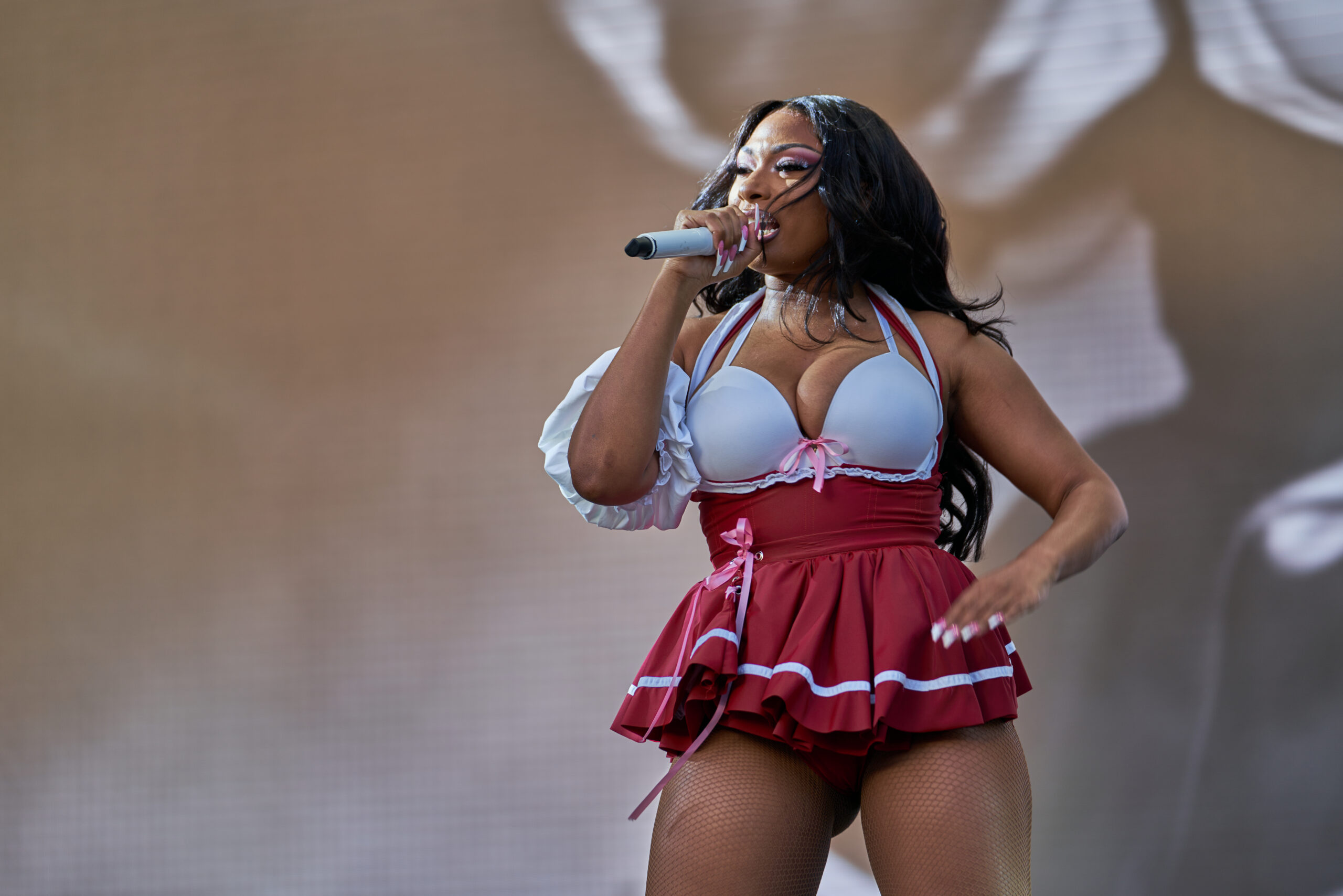
Photo by BABYGIRLTOS via Wikimedia Commons / CC BY 3.0